We’ve previously discussed how to sparingly use a scale, proper dieting, and eating sweets sensibly. For the third and final part of this mini series, read on.
 As winter melts into spring, there are many different ways to change up your exercise routine. After months of keeping fit indoors, why not head outside and enjoy the beauty of spring? Spring is a time of renewal, rebirth, and rejuvenation. “Create in me a clean heart, O God, and renew a steadfast spirit within me” (Psalm 51:10 NKJV). Take this time to add new things to your current exercise routine. If you have been putting off your New Year’s resolution to begin exercising, allow the freshness of spring and the beauty of God’s creation to motivate you (after speaking with your doctor, of course).
The Department of Health and Human Services recommends 30 minutes of exercise per day to reduce the risk of chronic disease, maintain a healthy weight, and to decrease the risk of heart disease, osteoporosis, diabetes, and high blood pressure. Before exercising, talk to your doctor; during exercise, always make sure to listen to your body. Start off with just 10 minutes if that is all you can do. Gradually work your way up by increasing the length of time and intensity of your workout. Keep in mind that the faster we move, the more calories we burn. Increased effort means increased calorie usage. A heavier person will burn more calories because it takes more effort to move more weight.
Outdoor workouts
Your body needs a variety of exercise to get the most benefits. For example, after lifting 3-pound weights for six weeks, 3 pounds may not feel heavy anymore and your body is generally not as challenged. You may need to move on to 5-pound weights if you want to build muscle and continue to burn calories. Consider doing some of your weight routine outdoors. Getting outside gives your body many different opportunities for a change. Just the change in scenery can help your mind and lift your spirits. “The heavens declare the glory of God and the firmament shows His handiwork” (Psalm 19:1 NKJV). Take your exercise mat outside under that big oak tree or walk the distance of the shopping plaza to the next store instead of driving down. If you are a beginner and have no idea what moves to do, visit your local library or search on Amazon for an instructional video or an illustrated movement book to take with you wherever you go.
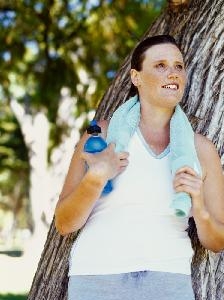 Runners, and walkers, instead of using a treadmill, go outside and run or walk around your neighborhood. Running 5 mph (a 12-minute mile) burns around 472 calories per hour, while walking at a moderate pace (3 mph) will burn 207 calories per hour. If you do not live in a neighborhood with sidewalks, try mapping out a few paths through town. You can take many routes to keep the scenery different. There are also nature trails and city and national parks. You know your area; just do a little research to pick out the best and safest spot for you. Make sure someone knows your route, do not go into bad areas, stay alert, keep your cell phone with you, and stay in areas that have plenty of other people nearby. Being outside can offer your body something different. Hills add an element of difficulty if you are used to running or walking on a flat surface. As your endurance improves, pick routes with more hills and increase the length of time or distance that you go.
If you are not much of a running/walking sort of person, there are many other things to do outside that can offer adequate exercise. Most city parks have one or more of the following: basketball courts (472 calories burned), tennis courts (413), volleyball courts, and softball/baseball fields (295). A non-competitive volleyball game with 6–9 members burns 177 calories per hour, while a competitive game in a gymnasium burns 236 calories per hour. Take your game to a beach court, and burn 472 calories per hour. Swimming laps with light-to-moderate effort will burn around 472 calories, while swimming those laps fast and vigorously will burn 590.] Grab a few friends and head on down to the nearest court or field for a few hours of fun that will hardly seem like the same old workout. Some places even have leagues in the spring and summer months that you could join. Many national parks have hiking trails, canoeing (177-413), bike trails(472 for 12-14 mph), and rock climbing(649 to ascend and 472 rappelling) to give your body a different challenge. Make sure to pick up a map, follow the designated trails and take all safety precautions. (For more information about calorie burning activities, visit Nutrition Strategy.)
As you consider the endless possibilities of renewing your exercise routine, allow springtime to revive your relationship with God. Keep your exercise routines in the proper perspective, and do not allow yourself to neglect your responsibility for your spiritual growth. “For bodily exercise profits a little, but godliness is profitable for all things, having promise of the life that now is and of that which is to come” (1 Timothy 4:8 NKJV). Include time with God as you are enjoying His wonderful gift of spring.
*All calories references in parentheses are calories burned per hour of activity for a 130-pound person. Calories burned will be higher for a heavier person and lower for a lighter person.
Food of the Month: Apples
 Apples taste great, are easily portable, and are ready to eat. They also have many health benefits. Apples are an excellent source of vitamin C and fiber, which can improve bowel health, lower cholesterol, and reduce the risk of heart disease, cancer, strokes, and diabetes.
Apples come in numerous varieties, such as Red Delicious, Golden Delicious, Granny Smith, Fuji, Royal Gala, Braeburn, Jonathan, McIntosh, Cripps Pink, and many more. Check with suppliers in your local area to find out which varieties are locally popular. Each variety of apple has its own taste. They Red Delicious, Fuji, and Royal Gala taste sweet; Golden Delicious and Granny Smith are tangy; and Braeburn and Cripps Pink have a tart taste. Fuji, Golden Delicious, and Granny Smith apples are good for cooking or baking. All varieties are good for eating out of hand or in salads.
Choose apples that are firm and smooth with no bruises. Always store apples in a plastic bag in a crisper or refrigerator drawer away from vegetables. (Apples can alter the taste of some vegetables if stored too closely.) Wash apples thoroughly before cutting or eating. One apple, with the skin, depending on the variety and size, can range from around 55 calories for a small (3.7oz) to 110 calories for a very large (7.5 oz.) Check nutrition information on the specific varieties available in your area. (For more information about apples, visit Dole’s website.) As you head outside to renew your workout, grab an apple and enjoy the delicious benefits.
By Sherri Houmard
 Yesterday,
  If you have a craving for ice-cream, go out for a cone, or purchase a pint of ice cream instead of a half- gallon. The same goes for a candy bar – instead of buying a whole package, purchase one of the smaller bars at the checkout counter.
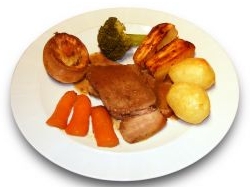 Serve with dinner rolls and milk, and have canned peaches or fresh fruit with low-fat frozen yogurt for dessert. For the entire meal, allow 30 minutes prep time, plus four hours cooking time.
 In our quest to become healthier this year, and to encourage readers to do the same, we’re publishing a three-part series about different aspects of sensible health. Last month we discussed the
 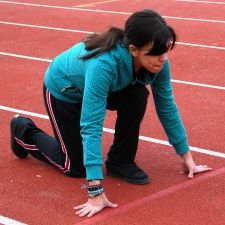 Many of us may have made the resolution to be healthier this year. Several of us might have even decided on a certain number of pounds we want to lose. We may have decided to never eat desserts again, or to only eat one sweet per week (or month). Others of us may have promised ourselves that we’ll exercise for 45 minutes every single day. If those are your resolutions, I suggest changing them!
 Tilapia is a mild white fish that’s native to Israel, but also raised in the United States. Low in mercury, fat, and sodium, and high in protein, tilapia is safe for pregnant women and young children, making it a healthy alternative to red meat at any family meal. This fish can be purchased fresh or frozen at most grocery stores. If you don’t usually enjoy seafood, I suggest giving this fish a try—it has only a very mild fish flavor, which can also be lessened by seasoning.
 The theme for this month is “pierce my heart to give.” And I really had to ask myself what health and fitness had to do with giving. But I finally came up with an answer: time. All of you have heard of projects such as
  1. Each day I’ll do a golden deed
 It tastes good
 How many of you have a doctor who has suggested taking a multivitamin? I do. Do you know what these vitamins and minerals do for you? Have you ever taken the time to ask yourself why they’re so special that they’re in every pharmacy? Many of these vitamins and minerals are needed by the body in trace amounts for general good health. Vitamin B6, for example, works with the proteins in your body, helps make hemoglobin, and is needed for the immune system to function properly.
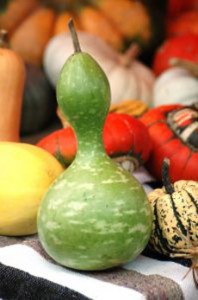 While this food may not be the most exciting food in the world, it is very healthy for you to eat. Zucchini is part of the squash family. Zucchini squashes are very low in calories. There are only 13 calories in a half-cup of raw zucchini. Nutritionally, zucchinis are rich in valuable antioxidants. They also contain beta-carotene, vitamin C, folic acid, and calcium. Zucchini squash is also a good source of fiber (4 grams per cup). An adult should get about 30 grams of fiber per day in their diet. Also, one cup of zucchini has nearly as much potassium as a banana (remember them from
  The following passage is from the book of Proverbs. It is about being a virtuous woman. I want you to notice that she is always busy, always doing something with her time. She’s helping others who are in need. She is healthy and confident, joyful and wise.
 What’s stopping you?
 Pumpkins have a lot of beta-carotene, which is a form of vitamin A. According to Pumpkins and More, “current research indicates that a diet rich in foods containing beta-carotene may reduce the risk of developing certain types of cancer and offers protection against heart disease. Beta-carotene offers protection against other diseases, as well as some degenerative aspects of aging.” So, help yourself to another slice of that pumpkin pie!
 I know many have already returned to school. If there is one thing that I remember it’s all of the homework and study assignments the teachers assigned. The harder we work, the better our grades will be.
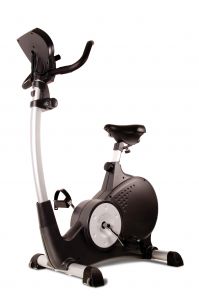 While reading isn’t the same thing as studying, it is a good place to start. There are several things that you can do. Read or listen to the Bible while you exercise. Most treadmills, stationary bikes, and elliptical machines have a place for you to set a book while you exercise–– take your Bible. Or take your CD player outside with you and listen to the Bible on CD. I often listen to it while driving. You can also bring a Bible with you wherever you go, in your purse or backpack, to read when you are waiting for an appointment or for a friend to meet you.
 I suggest breakfast as a good time to sit down and work on memorizing verses or passages in the Bible because breakfast is an important meal and this will encourage you to sit down and eat it. Research has shown that people who eat breakfast, on average, weigh less than those who don’t. By skipping breakfast, your metabolic rate slows down and your blood sugar drops. As a result, you become hungry and have less energy. This sets you up to impulsively snack in the morning––often on high-fat sweets––or to eat extra servings or bigger portions at lunch or dinner.
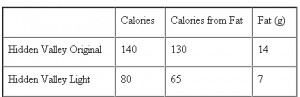
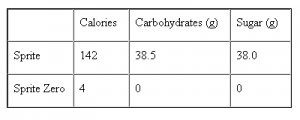
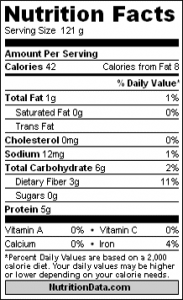
 Losing weight can be a long and laborious process. Losing one to two pounds a week is a healthy way to lose weight. There are several things that you can do for yourself to help this process along. One of the best ways to keep yourself from cheating is to keep a food and exercise log. Write down everything that you eat, and the exercise you do. This can be time consuming, but there is no better way to realize that in the boredom of the day, you ate a third of a pack of Oreos.
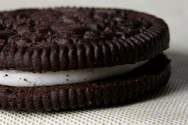 Snacks are where I tend to struggle the most. I have to watch carefully, because if I don’t, I end up eating too much. I also tend to overeat when watching movies – buttery popcorn and soft drinks! But there are several things you can do to curb overeating urges and channel them into something else.
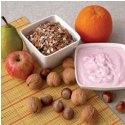 Look at these two pictures and decide which one is a better example for you to follow. I can give you some tools to help you along the way, but you must decide how you are going to live your life.
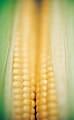 Corn is a good source of vitamin B, which supports heart health. It’s also rich in beta-cryptoxanthin, which can reduce your risk of getting lung cancer by as much as 27 percent. (Other sources of beta-cryptoxanthin include pumpkin, papaya, red bell peppers, tangerines, oranges, and peaches.) Thiamin supports memory – it can reduce your risk of age-related impairment in mental function (senility) and Alzheimer’s disease. The fiber has been shown to reduce your risk of colon cancer.
Recent Comments